Industrial Electrical Control Panels: Types, Functions & Uses


What Is an Industrial Electrical Control Panel?
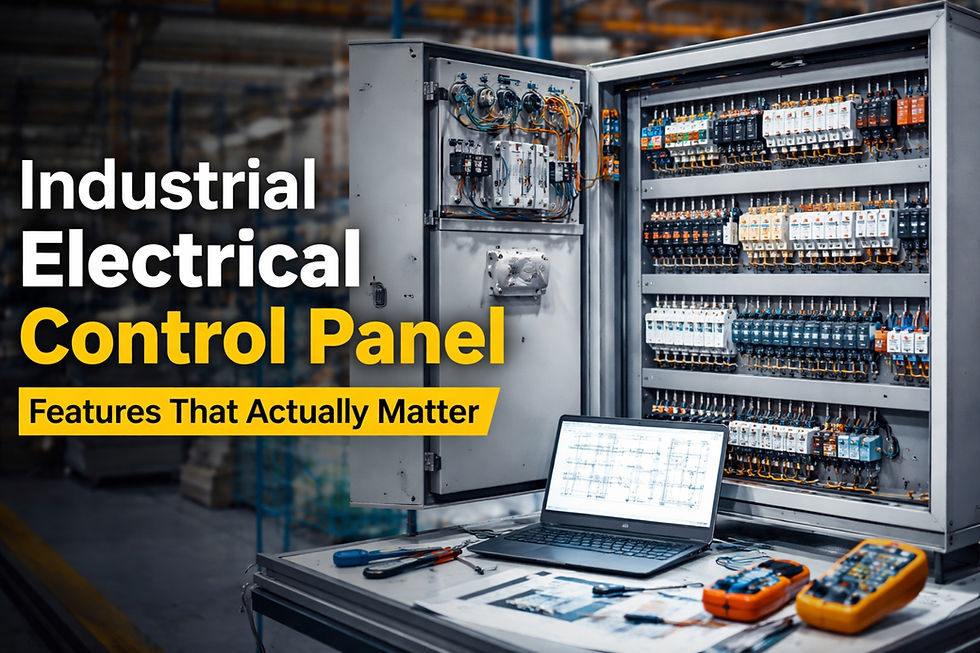
An industrial electrical control panel is a centralized enclosure that houses electrical components used to control, monitor, and protect industrial machines and processes. It acts as the brain of industrial automation, distributing electrical power while managing operations through devices such as circuit breakers, relays, PLCs, contactors, and control switches.
In simple terms, an electrical control panel connects the power source to machines and automation systems, ensuring safe and efficient operation in factories, plants, and large commercial facilities.
Industries rely heavily on these panels to automate operations, improve efficiency, prevent electrical hazards, and maintain consistent production quality. Without properly designed control panels, modern industrial systems from manufacturing lines to water treatment plants, simply cannot operate reliably.
Because of this critical role, many companies actively search for industrial electrical control panel manufacturers or electrical panel manufacturers near me when setting up or upgrading industrial infrastructure.
Why Industrial Electrical Control Panels Are Critical for Modern Industries
In today’s industrial environment, automation and precision are essential. Electrical control panels help achieve these goals by providing centralized control over machines and processes.
1. Centralized Control of Industrial Equipment
Control panels allow operators to monitor and manage multiple machines from a single interface. Instead of manually controlling each device, engineers can use switches, PLC systems, and HMIs integrated into the panel.
This improves operational efficiency and reduces human error.
2. Improved Safety
Electrical systems carry high voltage and significant risk. Control panels include protective components such as:
Circuit breakers
Surge protectors
Overload relays
Safety interlocks
These components prevent electrical faults, fires, and equipment damage.
3. Automation and Process Control
Industrial control panels are the backbone of automation. When integrated with PLCs and sensors, they allow machines to operate automatically with minimal human intervention.
For example:
Conveyor belt automation in factories
Temperature control in chemical plants
Water flow management in treatment plants
4. Reduced Downtime
A well-designed electrical panel helps detect faults quickly. Maintenance teams can diagnose issues faster because all components are centralized and labeled.
This reduces costly downtime and increases production efficiency.
5. Compliance with Industrial Standards
Modern control panels are designed according to electrical standards such as:
IEC standards
IS standards (India)
UL certifications
ISO guidelines
Reputable industrial electrical control panel manufacturers ensure these compliance standards are met.
Major Components Inside an Electrical Control Panel
An industrial control panel contains many electrical and electronic components working together to control machines.
Here are the key components typically found inside:
Circuit Breakers
Circuit breakers protect the electrical system from overloads and short circuits. They automatically cut power when abnormal current flow occurs.
Contactors
Contactors control the power supply to heavy machinery. They act like electrically operated switches that turn machines on or off.
Programmable Logic Controllers (PLC)
PLCs are small industrial computers that automate machine processes. They receive signals from sensors and execute programmed commands.
Relays
Relays control circuits using electrical signals. They help isolate control circuits from high-power circuits.
Busbars
Busbars distribute electrical power to different circuits within the panel.
Human Machine Interface (HMI)
Modern panels include touch-screen displays where operators monitor system status, alarms, and performance.
Types of Industrial Electrical Control Panels
Different industries require different types of control panels depending on their application. Below are some of the most commonly used industrial panels.
1. Power Control Panels (PCC)
Power Control Panels manage the distribution of electrical power in industrial facilities.
Key functions:
Control and distribute high voltage power
Protect electrical circuits
Monitor load distribution
These panels are typically installed in power plants, factories, and commercial complexes.
2. Motor Control Centers (MCC)
Motor Control Centers are used to control multiple electric motors from a centralized panel.
Common applications:
Manufacturing plants
Conveyor systems
HVAC systems
Pumping stations
MCC panels include motor starters, overload protection, and variable frequency drives.
3. PLC Control Panels
PLC panels are designed for automation and machine control.
Key features:
Programmable logic controllers
Input/output modules
Communication interfaces
Data monitoring systems
These panels are widely used in smart factories and Industry 4.0 environments.
4. Automatic Power Factor Control Panels (APFC)
APFC panels improve electrical efficiency by maintaining power factor close to unity.
Benefits:
Reduces electricity bills
Minimizes power losses
Improves energy efficiency
These panels are common in large industrial facilities with heavy electrical loads.
5. Drive Control Panels
Drive panels regulate the speed of electric motors using variable frequency drives (VFDs).
Applications include:
Pumps
Compressors
Elevators
Conveyor belts
These panels help industries save energy while improving machine performance.
How Industrial Electrical Control Panels Work
The working principle of an industrial electrical control panel is based on controlling electrical circuits using monitoring devices and automation systems.
Step-by-step operation
Power Input
Electric power enters the panel through the main breaker.
Distribution
Power is distributed via busbars and protective devices to various circuits.
Control Logic
PLCs and relays interpret signals from sensors and switches.
Execution
Contactors and drives operate machines based on the control commands.
Monitoring
Operators monitor the process using displays, indicators, and HMIs.
This system ensures machines run smoothly while preventing electrical faults.
Industries That Depend on Electrical Control Panels
Industrial electrical control panels are used across almost every sector.
Manufacturing Industry
Control panels automate production lines, robotics, and assembly processes.
Power Plants
They manage electricity distribution, turbine control, and monitoring systems.
Water Treatment Plants
Electrical panels control pumps, filtration systems, and chemical dosing.
Food Processing
Panels regulate temperature, packaging machines, and conveyor systems.
Pharmaceutical Industry
Control panels maintain strict environmental conditions and automated processes.
Infrastructure Projects
Panels are used in metro rail systems, airports, and smart buildings.
How to Choose the Right Electrical Control Panel Manufacturer
Selecting the right manufacturer is crucial for safety, performance, and long-term reliability.
When businesses search for electrical panel manufacturers near me, they should consider the following factors:
1. Industry Experience
Manufacturers with decades of experience understand complex industrial requirements.
2. Custom Engineering Capability
Every factory has unique electrical needs. A good manufacturer designs customized panels.
3. Compliance and Certification
Panels should comply with national and international electrical standards.
4. Quality Components
High-quality components ensure durability and reduced maintenance.
5. Technical Support
Reliable manufacturers provide installation guidance, testing, and after-sales support.
Expert Tips to Improve Electrical Control Panel Performance
Many industrial failures occur because panels are poorly designed or maintained.
Here are expert recommendations used by experienced industrial electrical control panel manufacturers:
Maintain Proper Panel Ventilation
Electrical components generate heat. Proper ventilation prevents overheating.
Label All Components Clearly
Clear labeling helps maintenance engineers diagnose issues quickly.
Perform Routine Inspections
Regular checks identify loose connections, worn wires, or faulty components.
Use Surge Protection Devices
Industrial environments often experience voltage fluctuations. Surge protection prevents equipment damage.
Implement Preventive Maintenance
Scheduled maintenance significantly increases panel lifespan.
Future of Industrial Electrical Control Panels
The future of electrical control panels is evolving with smart technologies.
Smart Panels
Modern panels integrate IoT sensors that monitor performance in real time.
Remote Monitoring
Engineers can monitor electrical systems using cloud-based dashboards.
Predictive Maintenance
AI-driven systems can detect faults before they cause breakdowns.
Energy Management Systems
Smart panels optimize power consumption across industrial facilities.
These innovations will make industrial systems more efficient and reliable.
FAQs
What is the purpose of an electrical control panel?
An electrical control panel manages and distributes electrical power while controlling industrial machines and processes safely.
What industries use industrial electrical control panels?
Manufacturing, power plants, pharmaceuticals, infrastructure, water treatment, and automation industries rely heavily on control panels.
What is the difference between PCC and MCC panels?
PCC panels control and distribute electrical power, while MCC panels specifically control electric motors.
How long do electrical control panels last?
With proper maintenance, industrial control panels can last 15–25 years depending on usage and environment.
Why should businesses choose experienced panel manufacturers?
Experienced industrial electrical control panel manufacturers ensure proper design, safety compliance, and long-term reliability.
PLC Automation Panels
Conclusion
Industrial operations depend heavily on reliable electrical infrastructure, and industrial electrical control panels form the backbone of that system. These panels control machinery, manage power distribution, automate processes, and ensure safety across factories and large-scale facilities.
From PCC panels and MCC panels to PLC automation systems, each type of electrical control panel plays a critical role in maintaining efficient industrial operations.
Businesses looking for reliable solutions should always work with experienced industrial electrical control panel manufacturers who understand industrial standards, customization requirements, and long-term reliability.
Looking for Reliable Electrical Control Panel Solutions?
If you are planning to install or upgrade industrial electrical systems, partnering with trusted electrical panel manufacturers near you ensures safe, efficient, and future-ready operations.
Contact Anubhav Electricals today to discuss your custom industrial electrical control panel requirements and get expert guidance for your facility.


Comments